
(or, for you Digital Immigrants, “Is the quality of writing being degraded by electronic communication?”)
Do you need to converse with a ‘Gen Yer’ and need to translate plain English to texting lingo or vice versa? Not to worry, there’s a website (http://www.lingo2word.com/translate.php) that can do it for you. Apparently, such is the divide between Digital Natives and Digital Immigrants (see previous blog)!
In 2008, The Pew Internet & American Life Project and the National Commission on Writing conducted surveys and focus groups to see what teens say about the role and impact of technological writing on both in-school and out-of-schoo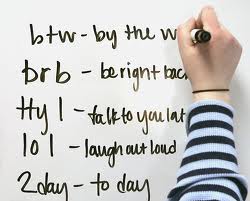 l writing. The subsequent report Writing, Technology and Teens (Lenhart et al, 2008) found that teens disassociate e-communication with ‘real writing’ – to teens, the act of exchanging emails, instant messages, texts and social network posts is communication that carries the same weight as phone calls and between-class hallway greetings.
“Teens generally do not believe that technology negatively influences the quality of their
writing, but they do acknowledge that the informal styles of writing that mark the use of
these text-based technologies for many teens do occasionally filter into their school work. Overall, nearly two-thirds of teens (64%) say they incorporate some informal styles from their text-based communications into their writing at school” (Lenhart et al, 2008).
As an academic, I’m not surprised to read that text-based shorthand and slang has found its way into the formal writings of students. I’ve taught at numerous universities in Australia and have monitored during recent years a noticeable drop in the standard of written work that students are submitting in their courses. Many students seem to have a carefree approach to essay and report structure, grammar, punctuation and spelling. However, I don’t believe that you can attribute this decline in writing skills solely to text-based technologies. Another contributing factor is that high schools are not spending enough time teaching basic writing skills.
The PEW study also found that most teens, an overwhelming 82%, feel that additional instruction and focus on writing in school would help improve their writing even further. The study noted that many teens believe good writing is an essential skill for success. Said one student:
“Cause like if you want to go and get a job and people see like you can’t
write or you can’t like read stuff then they won’t hire you. You have to have
good writing skills to get a good job” (Lenhart et al, 2008).
This quote like demonstrates like another problem with this generation of students.
For some time now I’ve been coordinating university internship programs and therefore get to hear firsthand the feedback from employers who take students as interns. Many employers are pleased with the quality of interns and graduates they receive from universities. However, just as many commented that the graduates they interview are lacking the ‘soft skills’ needed to survive in the workplace – skills related to interpersonal and team communication, networking, business and social etiquette. Because you also have to have good people skills to get a good job!
So now we have two problems – poor writing skills and poor people skills – both possibly linked to the same causes (young people with a zombie-like dependence on techno gadgets which are turning them into social inepts and a high school system that’s not teaching the basics any more).
Thanks Phil for a really interesting commentary about the problem of decreasing written literacy.
I found the lack of insight by the young people regarding their use of shortened spellings in academic writing the most interesting. I have certainly found that there is a distinct lack of ownership of there being a problem at all by our students. They also then tend to blame poor teaching in primary school which is probably fair on one front, however once they are aware of the issue theybdo have the skills to fix it up for themselves!